Senator Lindsey Graham died on the evening of Saturday, July 11, 2026, at the age of 71. His office initially described his death as the result of a “brief and sudden illness” while asking the public to respect his family’s privacy. The unexpected announcement shocked Washington because Graham had remained politically active and had appeared publicly only a day before his death.
A preliminary finding from the District of Columbia medical examiner identified the cause as an aortic dissection associated with arteriosclerotic cardiovascular disease. An aortic dissection occurs when a tear develops in the body’s main artery, creating a potentially fatal medical emergency. Therefore, reports describing the death simply as “sudden cardiac arrest” do not provide the precise preliminary medical explanation released by Graham’s office.
At present, there is no publicly available evidence that Graham was assassinated, poisoned, or deliberately harmed. President Donald Trump said he had spoken with Graham only minutes before the senator became ill and indicated that he did not suspect foul play. Trump later dismissed suggestions of an organized killing, pointing instead to Graham’s known cardiovascular problems and the preliminary medical findings.
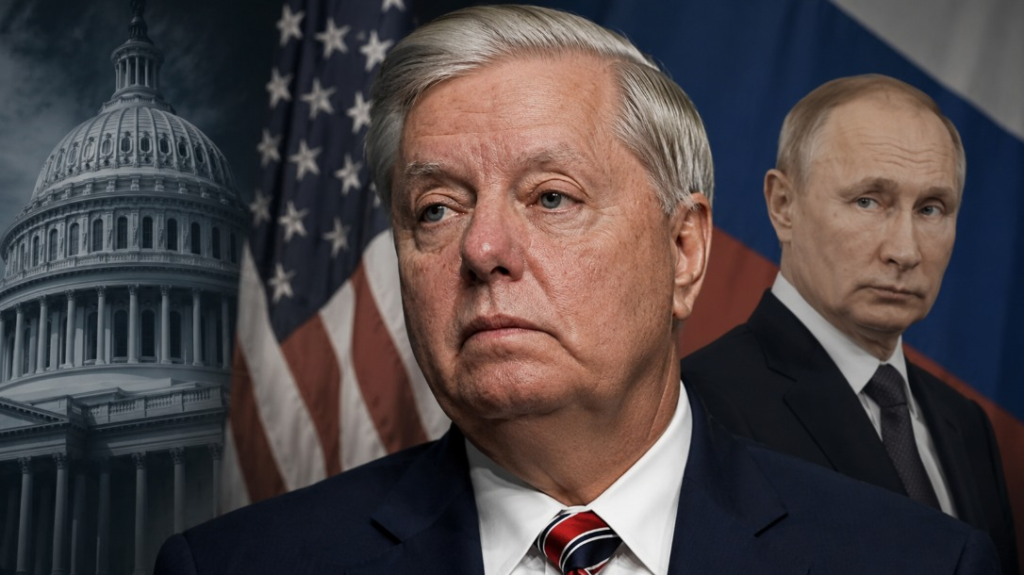
The speculation involving Russian President Vladimir Putin appears to have been driven largely by Graham’s foreign-policy record and the timing of his death. Graham had just returned from Ukraine, where he met Ukrainian President Volodymyr Zelenskyy and continued advocating for stronger American support. It was reportedly his tenth visit to Ukraine since Russia launched its full-scale invasion in February 2022.
Just one day before his death, Graham and a bipartisan group of senators announced that they had reached an agreement with the Trump administration to move forward with updated sanctions legislation targeting countries purchasing Russian oil and natural gas. The senators argued that those purchases were helping finance Putin’s war effort. Graham had spent more than a year promoting the sanctions plan and had become one of Washington’s most outspoken supporters of Ukraine.
Those circumstances quickly fueled online theories blaming Russia, Israel, Iran, vaccines, and several domestic political figures. However, none of those accusations has been supported by verified evidence. Authorities assisting after the senator’s death and calls from some lawmakers for complete medical transparency do not, by themselves, prove that investigators found signs of criminal activity.
There is also an important distinction between a preliminary medical finding and a completed investigation. Graham’s office said the final cause listed on the death certificate would remain pending until toxicology and microscopic testing were finished. That means it is reasonable to report that current evidence points toward a natural cardiovascular event, but it would be premature to claim that every part of the medical review has already been finalized.
Graham’s death may ultimately have a greater impact on American foreign policy than the unsupported conspiracy theories surrounding it. He served as an influential connection between Trump, Congress, and Ukraine, particularly on sanctions and military assistance. Other senators have pledged to continue advancing his Russia sanctions legislation, with some suggesting that the measure should be renamed in his honor as part of his political legacy.
